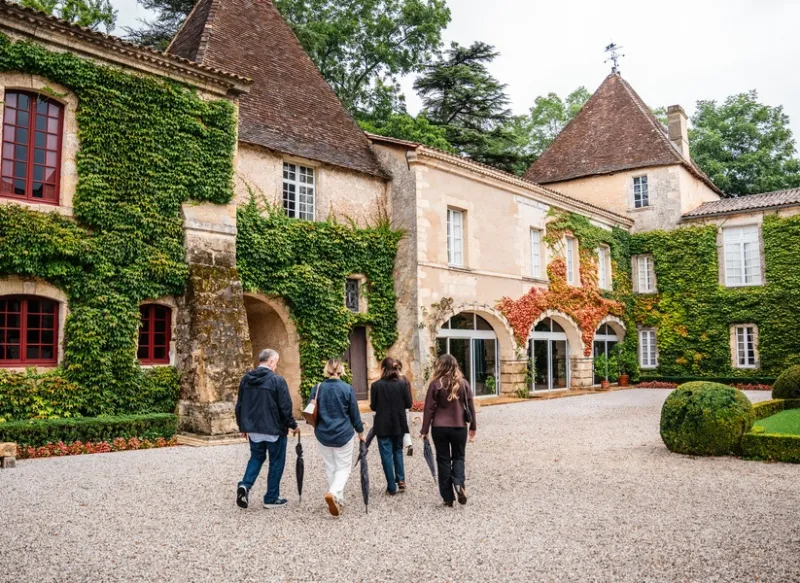
Bordeaux Wine Tours: The Complete Guide
Published on · Last updated on
Bordeaux wine tours run from 55€ for a half-day in a coach to 195€ for a full-day in a small van, with private tours available beyond. Every tour departs from the city centre and covers one of the wine regions surrounding Bordeaux: Saint-Émilion, Médoc, Graves, Sauternes, Entre-deux-Mers or Blaye-Bourg. This guide compares the options, region by region and format by format, so you can choose the right tour before you book.
Written by the Bordeaux Tourism Office, it covers every certified operator on our platform.
Prefer to taste in the city without leaving Bordeaux? See our guide to wine tasting classes and workshops.
Is Bordeaux worth visiting for wine?
Yes, without hesitation. Bordeaux is one of the very few places in the world where a UNESCO-listed city, a UNESCO-listed vineyard and a medieval UNESCO village all sit within 40 minutes of each other.
You can taste several distinct wine regions from one base. Merlot from Saint-Émilion, Cabernet Sauvignon from the Médoc, dry whites from Entre-deux-Mers, sweet Sauternes, and family-run estates in Blaye-Bourg. Each region has its own character, and any of them can be visited as a half-day trip.
You do not need to drive. Every tour on this page departs from central Bordeaux with transport included. You are picked up, driven to the estates and brought back, so you can taste freely without worrying about the road or French drink-drive limits. Prefer to visit a château directly at the estate on your own? See our selection of wine châteaux to visit.
The tours are built for all levels. Guides adapt the tasting depth to their group. Complete beginners are welcome, and no one will make you feel like you should have known what tannins are.
The wine regions around Bordeaux
Bordeaux is not one vineyard. It is a cluster of regions, each with its own landscape, grapes and style. Here is what each one offers.
Saint-Émilion
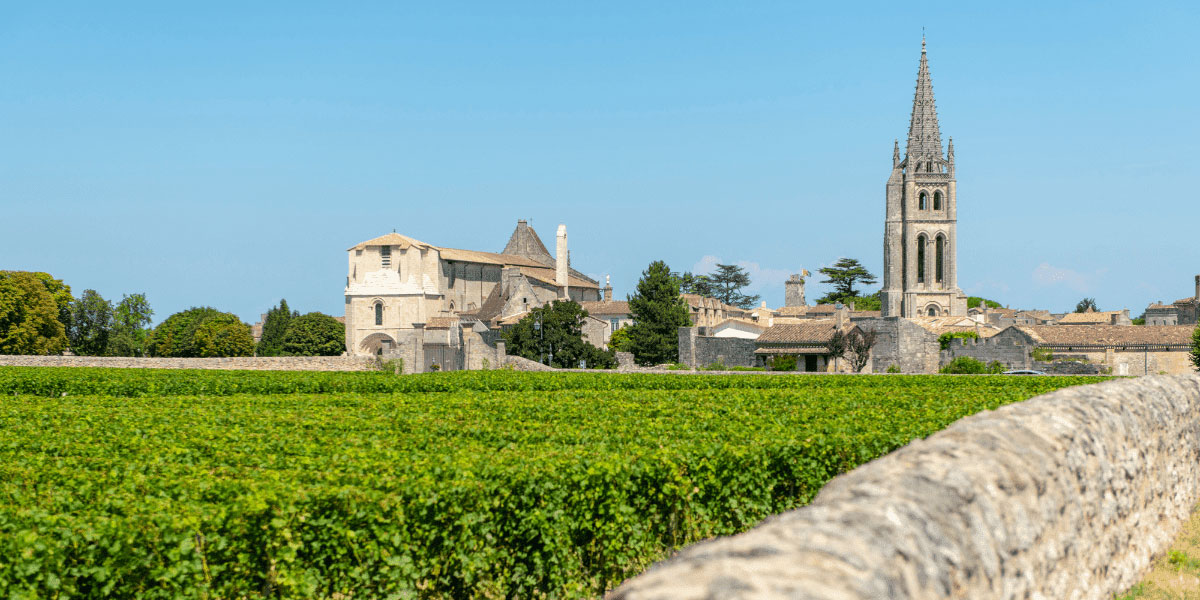
One of the most popular destinations for a wine tour. Saint-Émilion combines a medieval UNESCO village (cobbled streets, a monolithic underground church, panoramic views) with Merlot-dominant red wines that are round and approachable. Depending on the tour, you visit one or two châteaux and spend time in the village itself, which makes it a good choice if you want wine and heritage in the same trip. Book early for September, when the harvest season draws the most visitors.
Médoc
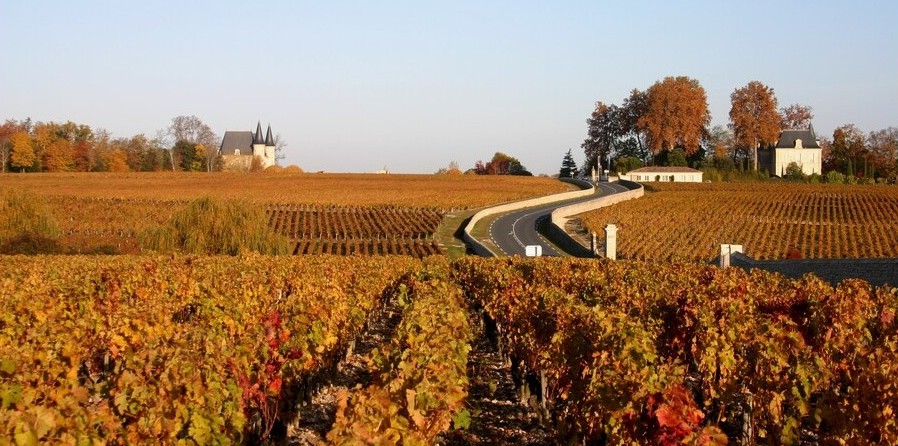
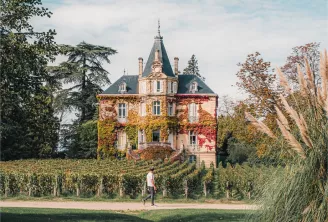
The prestige region. The Médoc is home to the Classified Growths of 1855, which means Château Margaux, Pauillac (Lafite, Latour, Mouton Rothschild) and Saint-Julien. The Route des Châteaux (D2) is one of the most striking drives in the wine world, running past the grand estates that made Bordeaux famous, and the landscape alone is worth the trip. Cabernet Sauvignon dominates the blends, producing structured, age-worthy reds. Choose the Médoc for its iconic estates and its scenery.
Graves and Sauternes
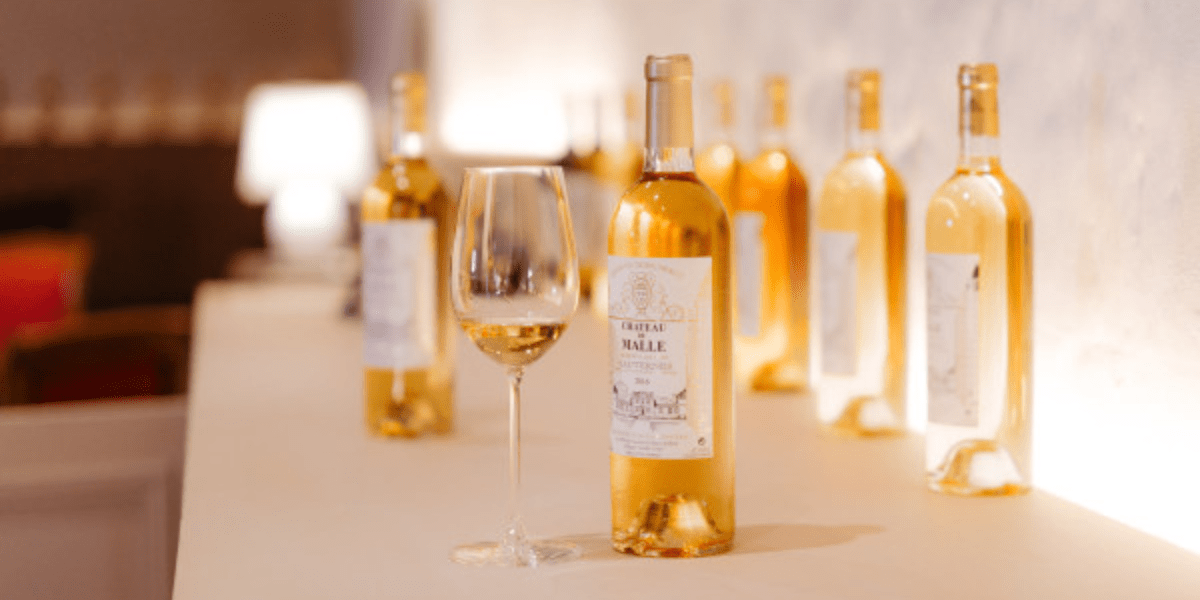
Two neighbouring regions south of the city, often visited together. Graves is one of the oldest wine regions in Bordeaux and the only appellation to produce both world-class reds and dry whites (Pessac-Léognan is home to Château Haut-Brion, the only First Growth outside the Médoc). Sauternes, just further south, makes the famous sweet white wines from grapes affected by "noble rot", a fungus that concentrates sugars and aromatics. If you want to taste something other than a classic Bordeaux red, this is where to go.
Browse Graves and Sauternes tours
Entre-deux-Mers
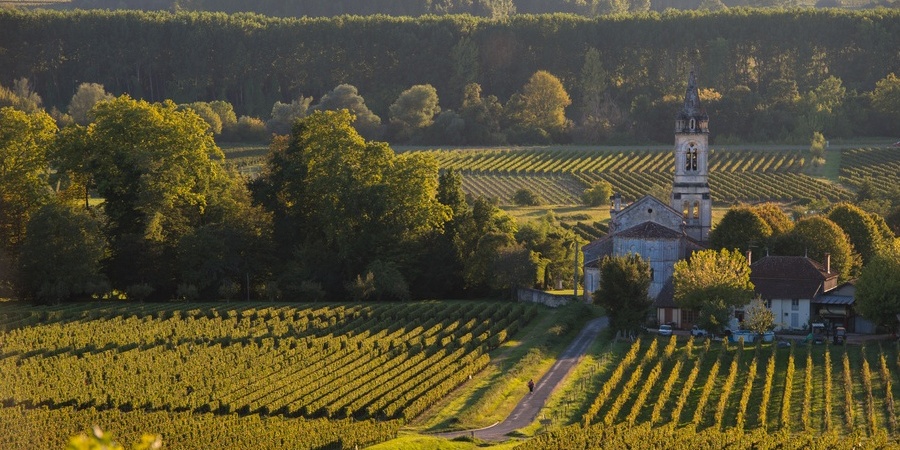
The triangle of rolling countryside between the Garonne and the Dordogne. This is Bordeaux's largest white wine appellation, based on Sauvignon Blanc and Sémillon, set among hills, medieval abbeys and small villages. Choose Entre-deux-Mers if you want a relaxed pace, countryside scenery, and dry white wines.
Blaye and Bourg
Facing the Médoc from the opposite bank of the Gironde estuary. This is the region of small family-run châteaux and a relaxed, authentic atmosphere. Blaye has a UNESCO-listed citadel built by Vauban in 1689, and Bourg is a "Petite Cité de Caractère" perched above the river. The wines are Merlot-dominant reds. Choose Blaye-Bourg for a personal, welcoming experience with the winemakers themselves.
Bus, van or private: which tour format is right for you
The most important decision is not the region. It is the format.
Large group by coach (bus)
A guided group tour by coach (on average around 30 participants), with visits at 2 or 3 estates. This is the entry-level format at 55€ for a half-day and 99€ for a full-day, available across all major regions including Saint-Émilion and the Médoc. It is the best value way to discover the vineyards, with a guide who takes care of everything from departure to return. A great choice for a first tour or for travellers who want to see the region without a large budget.
Small group in a van
A smaller group (6 to 12 participants) travelling by minivan, with more time at each estate and a more conversational pace with the guide. Half-day tours run 75€ to 105€, full-day tours 145€ to 195€. Choose this format if you would like a more intimate setting and more direct contact with the winemakers.
Private tour
A dedicated vehicle for your group only, with a personalised itinerary. This is also where luxury wine tours sit: premium vehicles, access to smaller and more exclusive estates, and a pace set entirely by you. Suitable for small groups of friends, families, business visits or special occasions. See private tour options.
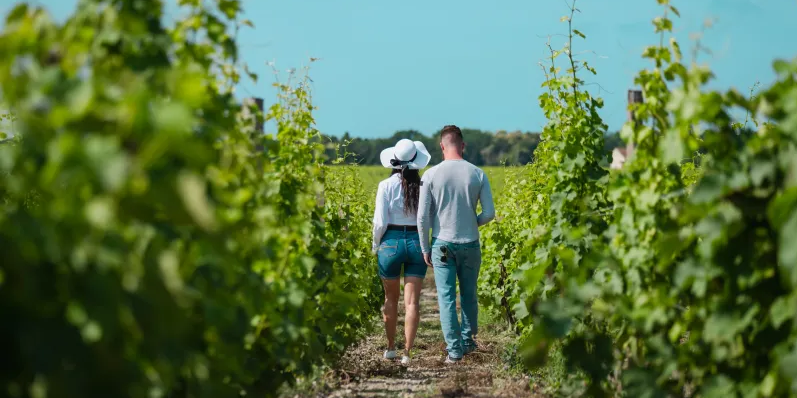
Half-day or full-day: which duration to pick
Half-day tours cover one region, with visits and tastings, and return to Bordeaux around 1pm (morning) or 6pm (afternoon). A good choice if you are in Bordeaux for a short stay and want to keep time free for the city itself.
Full-day tours either combine two regions (Saint-Émilion plus Médoc is a classic pairing) or explore one region in more depth. Return around 6pm to 7pm. A good choice if you have already seen central Bordeaux, or if wine is the main reason for your trip. Lunch varies by tour: some include a meal, some a picnic in the vineyards, and some leave you free time to eat in Saint-Émilion or another village.
Wine tasting on a tour: what and how much you taste
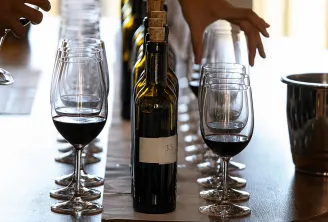
Every wine tour includes tastings, usually 2 to 3 wines per château, so around 4 to 6 wines across a half-day and more on a full-day. The guide or the estate's host walks you through each wine: what grape it is, why it tastes the way it does, how to read what is in your glass.
You do not have to drink everything. Spittoons are provided at every estate, and skipping a wine is completely normal. If your main interest is the tasting itself, a small-group van tour gives you more time at each stop and more one-to-one time with the winemaker.
Prefer to taste without leaving the city? A wine tasting workshop or class in central Bordeaux is the alternative to a full vineyard tour.
What to expect on a Bordeaux wine tour
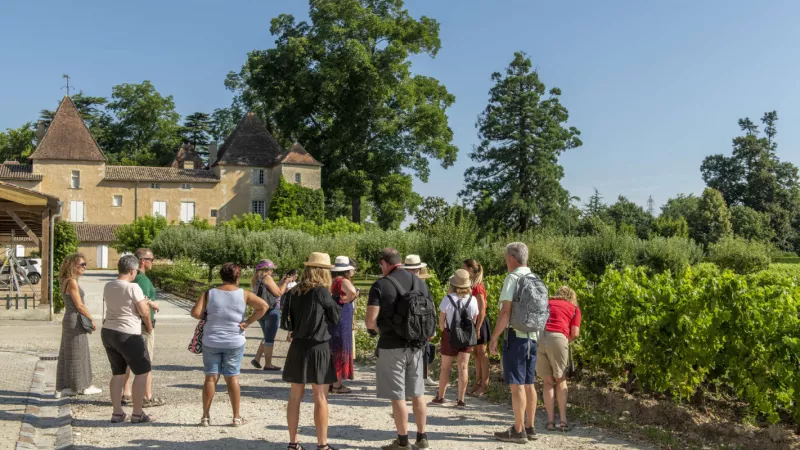
A few practical points to know before booking.
Pick-up. Almost every tour departs from the Bordeaux Tourism Office (12 cours du 30 Juillet), a short walk from the Quinconces tram stop. Some operators also collect at the train station or from selected hotels.
What is included. Transport, an English-speaking guide, entry fees at the châteaux, and tastings at each estate. Full-day tours may include lunch, a picnic, or free time to eat, depending on the operator.
Language. Every tour showing a British flag on the listing runs in English. Some smaller-group tours run in French only, so check the flags before booking.
Buying wine. Yes, and often at château prices. Bring a card. Bottles bought at the estate can be shipped to most countries, just ask the winemaker.
Dress code. None specific. Comfortable clothes, closed shoes for the cellars (they are cold and floors can be slippery), and a light jacket even in summer for the underground rooms.
Children. Some tours accept children, others do not. If you are travelling with kids, see our family-friendly wine visits.
When to book a wine tour
High season runs from May to October, with peaks in June and during the September harvest (les vendanges). Book 2 to 3 weeks ahead in summer for popular tours, longer for private options.
The quieter months (November to March) are a great time to visit too: smaller groups, more availability, and the winemakers have more time to spend with you. The vines are bare, but the cellars are working and the tastings are just as rich. It can be one of the most rewarding times to discover Bordeaux wine.
For a first visit with mild weather and active vineyards, May, June, late September and early October are ideal.
Frequently asked questions
How much does a Bordeaux wine tour cost?
Half-day tours start at 55€ per person in a large coach group, or 75€ to 105€ in a small van. Full-day tours run 99€ (coach) or 145€ to 195€ (van). Private tours are priced by group and start higher.
What is the best Bordeaux wine tour?
It depends on your priorities. Saint-Émilion combines a medieval village with its vineyards, the Médoc offers grand estates and iconic scenery, Graves and Sauternes let you taste dry and sweet whites, and Entre-deux-Mers and Blaye-Bourg offer a more relaxed, rural experience. For format, a coach tour is the best value, a van tour is more intimate, and a private tour is fully tailored to you.
Is Bordeaux worth visiting just for the wine?
Yes. Bordeaux is the largest fine-wine region in the world, and the city itself is UNESCO-listed. Even on a short trip, one wine tour is enough to understand why the region matters.
What is the difference between Saint-Émilion and the Médoc?
Saint-Émilion is a medieval village surrounded by Merlot-based vineyards, with round, approachable wines and plenty to see on foot. The Médoc is a landscape of grand estates along the Route des Châteaux, with Cabernet Sauvignon-based wines that are more structured. Both make excellent tours, and many full-day trips combine the two.
Can I visit Bordeaux wineries without a tour?
Yes, several estates accept direct bookings. But you will need transport, and drink-drive limits apply. If you want to skip the driving, see our guide to visiting Bordeaux vineyards without a car.
How long does a Bordeaux wine tour take?
Half-day tours run 4 to 5 hours door-to-door. Full-day tours run 8 to 9 hours, usually 9am to 6pm.
Are wine tours suitable for beginners?
Yes. Guides adjust the depth of the tasting to your level. Complete beginners are common on group tours, and no prior knowledge of wine is expected.